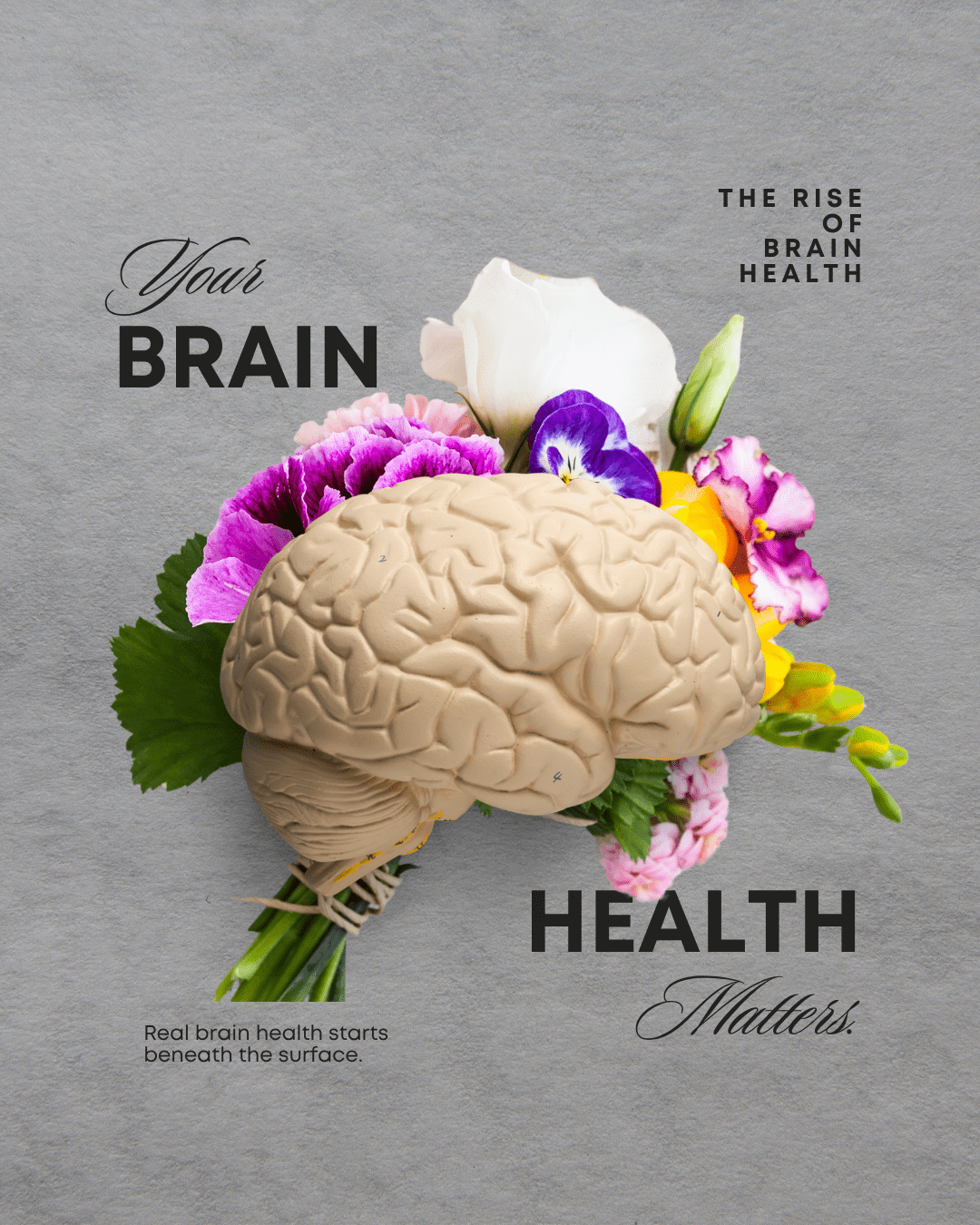
In recent years, “brain health” has moved to the forefront of the wellness conversation.
From nervous system regulation to cognitive optimisation, more people are recognising that how we feel, think, sleep, and function is deeply rooted in the brain.
That shift is important and long overdue.
But as awareness increases, so does confusion.
Because not everything being marketed as “brain health” is grounded in neuroscience.
When Brain Health Becomes a Trend
The demand for better mental and cognitive wellbeing has led to an influx of tools, apps, and at-home technologies claiming to “reset” the nervous system or optimise brain function.
Many of these can feel helpful in the moment. They may promote relaxation, create a sense of calm, or provide temporary relief.
But there is a critical distinction that often gets overlooked:
- Supporting how you feel
- vs.
- Changing how the brain functions
These are not the same.
Feeling calmer does not necessarily mean the underlying neural patterns driving anxiety, fatigue, or dysregulation have changed.
The Brain Is Not Just Something to “Calm” It Is a System
The brain is a dynamic, self-organising system made up of networks that are constantly learning and reinforcing patterns.
Difficulties such as:
- Sleep disruption
- Anxiety
- Emotional reactivity
- Attention challenges
- Cognitive fatigue
are not random or isolated experiences.
They reflect how the brain is currently organising itself.
If we want meaningful, lasting change, we need to work at the level where those patterns are formed not just at the level of how they feel.
Where ILF Neurofeedback Differs
Infra-Low Frequency (ILF) neurofeedback is fundamentally different from many at-home “brain health” technologies.
Rather than delivering a generalised experience, ILF neurofeedback works directly with the brain’s regulatory networks particularly those involved in arousal, stability, and self-regulation.
This process is:
- Non-invasive and passive — the brain is not being forced or stimulated into a state
- Feedback-based — the brain receives real-time information about its own activity
- Adaptive — the brain uses this information to reorganise itself over time
Crucially, this is not about short-term state change.
It is about supporting the brain to develop more stable, efficient patterns of functioning.
Why At-Home Technologies Are Not the Same
Many at-home tools operate on fixed protocols or generalised settings.
They are designed for accessibility, not precision.
This means:
- They are not tailored to the individual brain
- They do not adapt in real time based on subtle responses
- They cannot account for complex or dysregulated patterns
- They often prioritise user experience over neurophysiological accuracy
Without clinical insight, it is difficult to determine:
- Whether a response is beneficial or destabilising
- When to adjust frequency or placement
- How to respond to subtle changes in the nervous system
As a result, these tools may support relaxation but they are not designed to facilitate deep, lasting reorganisation of brain function.
At Encephalon, Neuroscience Comes First
At Encephalon, our work is grounded in one principle:
Understanding the brain as it is functioning in the individual.
This involves:
- Detailed observation of responses during sessions
- Continuous adjustment of training parameters
- Personalised electrode placement and frequency optimisation
- Clinical decision-making based on experience and neurophysiology
No two brains are the same, and no two sessions are identical.
The process is iterative, responsive, and guided not automated.
Why Expertise Matters
In neurofeedback, the technology is only one part of the equation.
The outcome is shaped by the practitioner’s ability to interpret and respond to the brain in real time.
This includes knowing:
- What patterns are being expressed
- Why they are occurring
- How the brain is responding to feedback
- When to stabilise, and when to challenge
This level of nuance cannot be pre-programmed into a device.
It comes from training, clinical experience, and a deep understanding of brain function.
Moving Beyond Surface-Level Solutions
There is absolutely a place for relaxation-based tools and general wellbeing practices.
But if the goal is to:
- Improve sleep at its root
- Reduce anxiety long-term
- Strengthen attention and cognitive clarity
- Build emotional stability
- Optimise day-to-day brain function
Then the approach must go deeper than temporary state change.
It must work with the brain’s underlying regulatory systems.
A More Informed Approach to Brain Health
As the “brain health” space continues to expand, it’s important to move from passive consumption to informed decision-making.
To ask:
- Is this personalised?
- Is it adaptive?
- Is it grounded in neuroscience?
- Is it addressing function or just experience?
Because meaningful change is not driven by trends.
It is driven by precision, understanding, and the ability to support the brain in a way that is measurable and specific.
Final Thoughts
The growing focus on brain health is something to be welcomed.
But with that comes responsibility:
To look beyond marketing
To prioritise substance over simplicity
To choose approaches that are grounded in science
At Encephalon, we believe your brain deserves more than a generic solution.
It deserves to be understood, observed, and supported with precision.