Understanding Stroke in Scotland
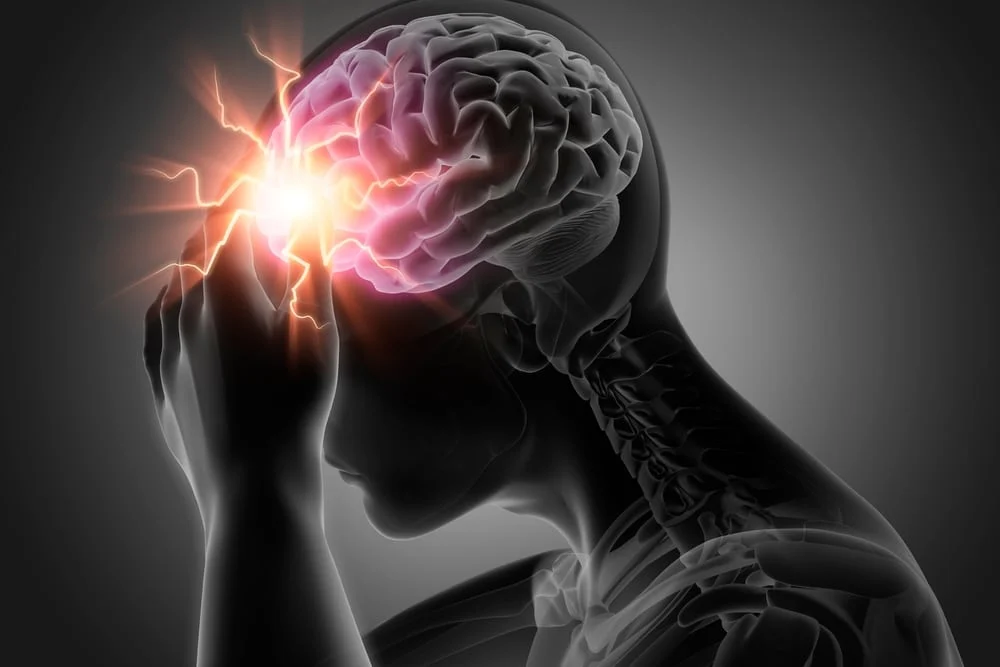
Every year, thousands of people across Scotland experience a stroke, a neurological event that remains one of the leading causes of disability and death in the United Kingdom. According to Public Health Scotland (2024), there were approximately 11,341 confirmed stroke diagnoses last year, with around 85% classified as ischaemic (caused by a blood clot obstructing blood flow to the brain) and the remaining largely haemorrhagic (caused by bleeding within the brain). While national initiatives have contributed to a gradual decline in mortality rates, the burden of stroke — physically, emotionally, and economically — continues to be substantial across Scottish communities (Public Health Scotland, 2024).
World Stroke Day, observed on October 29th, serves as a vital reminder that early recognition and intervention save lives. Campaigns such as FAST (Face, Arm, Speech, Time) have improved public understanding, but much less attention is given to the long-term journey of neurorehabilitation — and the exciting role of brain-based, non-invasive approaches such as Neurofeedback.
Stroke Is Not One-Size-Fits-All
While the term stroke is often used broadly, the specific outcomes depend on where in the brain the event occurs and how the surrounding neural networks are affected. A stroke in the motor cortex can cause weakness or paralysis on one side of the body, whereas damage in the temporal or frontal regions may impact speech, memory, or emotional regulation (Cramer et al., 2011).
In addition to the location of the lesion, the inflammatory response following a stroke plays a crucial role in determining recovery. After the initial ischemic or haemorrhagic event, the brain mounts an immune response that involves the activation of microglia and the release of cytokines. This inflammation helps clear cellular debris and supports early repair, but if excessive or prolonged, it can hinder neuroplasticity and worsen secondary damage (Iadecola & Anrather, 2011).
Moreover, this inflammatory process can disrupt network connectivity, altering how brain regions communicate. Studies using functional MRI have shown that after a stroke, the brain often displays maladaptive hyperactivity in areas opposite the lesion and reduced activity in the damaged hemisphere, which can impede recovery (Rehme & Grefkes, 2013). Understanding these dynamics is essential for designing effective, individualized rehabilitation approaches.
Neuroplasticity: The Science of Rewiring After Stroke
The capacity for recovery after a stroke lies in one of neuroscience’s most remarkable discoveries: neuroplasticity. Neuroplasticity refers to the brain’s inherent ability to reorganise its structure, function, and connections in response to experience, learning, and injury (Kleim & Jones, 2008). This principle underpins all modern rehabilitation efforts — from physiotherapy and occupational therapy to emerging neurotechnological interventions.
During recovery, undamaged brain regions can assume the roles of damaged ones through the formation of new synaptic connections and the strengthening of existing ones. However, neuroplasticity can be adaptive or maladaptive. Without guidance, compensatory mechanisms may develop in ways that reinforce inefficient movement patterns or emotional dysregulation (Takeuchi & Izumi, 2013). The goal of rehabilitation, therefore, is to guide plasticity in a functional direction, supporting the restoration of balance and coherence across neural networks.
Neurofeedback: A Non-Invasive, Holistic Option for Neurorehabilitation
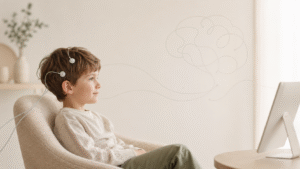
Neurofeedback (NFB) is a non-invasive method that uses real-time brain activity monitoring, typically via EEG, to train individuals to self-regulate their neural patterns. In stroke rehabilitation, Neurofeedback aims to promote reactivation of damaged or under active regions, suppress maladaptive patterns, and enhance coordination between hemispheres (Kober et al., 2015).
Several studies have demonstrated the efficacy of Neurofeedback in improving motor function and cognitive outcomes after stroke. For example, Pichiorri et al. (2015) conducted a randomised controlled trial where chronic stroke patients received EEG-based Neurofeedback targeting motor areas. The results showed significant improvements in hand movement and motor imagery abilities compared to control groups. Similarly, Mihara et al. (2013) reported that fMRI-based Neurofeedback led to functional reorganisation within motor networks and correlated with measurable gains in motor performance.
Beyond motor recovery, Neurofeedback has also shown promise in enhancing attention, emotional stability, and overall self-regulation in post-stroke patients (Ramos-Murguialday et al., 2013). This aligns with a holistic approach to neurorehabilitation, emphasizing both physical and emotional recovery.
Importantly, Neurofeedback aligns with the modern biopsychosocial model of rehabilitation: addressing not only the biological lesion but also the individual’s emotional resilience, sense of agency, and engagement in recovery.
Hope Beyond the Event: Recovery as a Continuing Journey
A stroke can dramatically alter one’s life, but it does not mark the end of one’s story. Advances in neuroscience have made it clear that recovery is not merely about “compensation” but about reconnection and reorganisation. By integrating evidence-based approaches — from traditional physiotherapy to innovative tools such as Neurofeedback — patients can continue to rebuild neural pathways long after the initial injury.
At Encephalon UK, we view neurorehabilitation as a dynamic process, rooted in neuroplasticity and guided by individualised assessment. Through tailored Neurofeedback training, we support the brain in restoring balance, enhancing resilience, and optimising function. Recovery after stroke is not instantaneous, but it is possible — and every moment of feedback represents another opportunity for the brain to heal itself.
References
Cramer, S. C., Sur, M., Dobkin, B. H., O’Brien, C., Sanger, T. D., Trojanowski, J. Q., Rumsey, J. M., Hicks, R., Cameron, J., Chen, D., Chen, W. G., Cohen, L. G., deCharms, C., Duffy, C. J., Eden, G. F., Fetz, E. E., Filart, R., Freund, M., Grant, S. J., … Vinogradov, S. (2011). Harnessing neuroplasticity for clinical applications. Brain, 134(6), 1591–1609. https://doi.org/10.1093/brain/awr039
Hammond, D. C. (2011). What is neurofeedback: An update. Journal of Neurotherapy, 15(4), 305–336. https://doi.org/10.1080/10874208.2011.623090
Iadecola, C., & Anrather, J. (2011). The immunology of stroke: From mechanisms to translation. Nature Medicine, 17(7), 796–808. https://doi.org/10.1038/nm.2399
Kleim, J. A., & Jones, T. A. (2008). Principles of experience-dependent neural plasticity: Implications for rehabilitation after brain damage. Journal of Speech, Language, and Hearing Research, 51(1), S225–S239. https://doi.org/10.1044/1092-4388(2008/018)
Kober, S. E., Wood, G., Kurzmann, J., Friedrich, E. V., Stangl, M., Wippel, T., Väljamäe, A., Neuper, C., & Ischebeck, A. (2015). Near-infrared spectroscopy based neurofeedback training increases specific motor imagery related cortical activation compared to sham feedback. Frontiers in Human Neuroscience, 9, 701. https://doi.org/10.3389/fnhum.2015.00701
Mihara, M., Hattori, N., Hatakenaka, M., Yagura, H., Kawano, T., Hino, T., & Miyai, I. (2013). Near-infrared spectroscopy-mediated neurofeedback enhances motor imagery-related cortical activation in stroke patients: A pilot study. Stroke, 44(4), 1091–1098. https://doi.org/10.1161/STROKEAHA.111.000955
Pichiorri, F., Morone, G., Petti, M., Toppi, J., Pisotta, I., Molinari, M., Paolucci, S., Inghilleri, M., Astolfi, L., Cincotti, F., & Mattia, D. (2015). Brain–computer interface boosts motor imagery practice during stroke recovery. Annals of Neurology, 77(5), 851–865. https://doi.org/10.1002/ana.24390
Public Health Scotland. (2024). Scottish stroke statistics 2024: Summary report. https://publichealthscotland.scot
Ramos-Murguialday, A., Broetz, D., Rea, M., Läer, L., Yilmaz, Ö., Brasil, F. L., Liberati, G., Curado, M. R., Garcia-Cossio, E., Vyziotis, A., Cho, W., Agostini, M., Soares, E., Soekadar, S. R., Cohen, L. G., Birbaumer, N. (2013). Brain–machine interface in chronic stroke rehabilitation: A controlled study. Annals of Neurology, 74(1), 100–108. https://doi.org/10.1002/ana.23879
Rehme, A. K., & Grefkes, C. (2013). Cerebral network disorders after stroke: Evidence from imaging-based connectivity analyses of active and resting brain states in humans. Journal of Physiology, 591(1), 17–31. https://doi.org/10.1113/jphysiol.2012.243469
Takeuchi, N., & Izumi, S. I. (2013). Rehabilitation with poststroke motor recovery: A review with a focus on neural plasticity. Stroke Research and Treatment, 2013, 128641. https://doi.org/10.1155/2013/128641