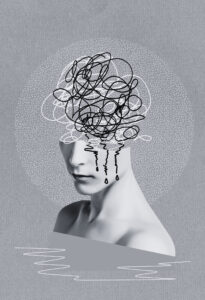
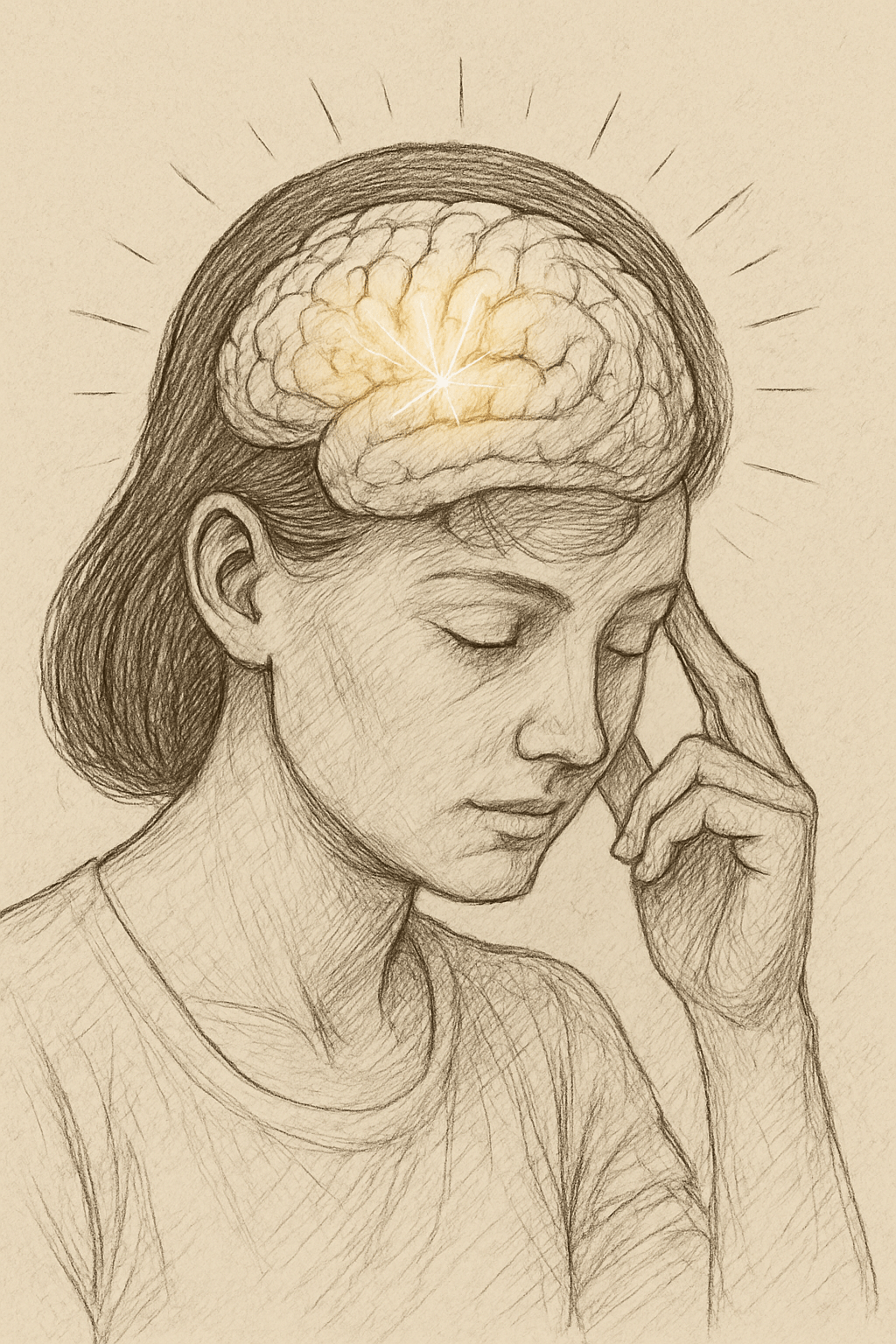
Cognitive performance is the cornerstone of our daily lives. Whether we are problem-solving at work, learning a new skill, or simply remembering where we left our keys, our brain’s ability to focus, adapt, and retain information is central to how we move through the world. But what happens when this ability is compromised? For many, issues like brain fog, memory lapses, impulsivity, or fatigue are not just inconveniences — they are daily barriers to living fully.
In recent decades, neuroscience has illuminated a powerful, non-invasive method for enhancing cognitive function: Infra-Low Frequency (ILF) Neurofeedback. Grounded in decades of brain research, ILF neurofeedback uses real-time monitoring of brain activity to encourage the nervous system to self-regulate. Unlike medication, it does not impose an external chemical change but instead supports the brain in reorganising itself through neuroplasticity.
The Science of Cognitive Rehabilitation
Research into neurofeedback for cognitive rehabilitation following traumatic brain injury (TBI) and acquired brain injury (ABI) has demonstrated measurable improvements in executive function, memory, and attention. For example, Schoenberger et al. (2001) showed that neurofeedback training in TBI patients significantly improved working memory and cognitive flexibility compared to control groups. More recent studies (Hammond, 2007; Thornton & Carmody, 2009) have reported that ILF neurofeedback can reduce post-concussive symptoms such as headaches, dizziness, and irritability while also improving sleep regulation and attention.
These outcomes highlight a unique advantage of ILF neurofeedback: rather than targeting isolated symptoms, it works on the self-regulatory capacity of the brain as a whole, often leading to improvements across multiple domains simultaneously.
From Rehabilitation to Peak Cognitive Performance
While much of the early research on neurofeedback focused on rehabilitation, more recent studies have extended into cognitive enhancement for healthy individuals. A 2020 review by Rogala et al. in Neuroscience & Biobehavioural Reviews found that neurofeedback has shown consistent benefits in enhancing sustained attention, reducing reaction times, and improving working memory across both clinical and non-clinical populations.
In sports psychology, studies have demonstrated faster reaction times in soccer players (Mirifar et al., 2017), improved precision in archery and shooting (Landers et al., 1991), and enhanced focus under pressure in competitive performance environments. These findings suggest that neurofeedback does not just repair — it optimises.
The Human Impact
Beyond the data, the real story lies in the lives changed. For individuals recovering from head injuries, ILF neurofeedback can mean the difference between struggling to get through the day and regaining independence. For children and adults with developmental differences who have been told they “can’t learn,” it can mean unlocking new levels of attention and processing they had been denied for years. And for professionals, athletes, and students, it offers a way to sharpen the very tool they rely on most: the brain.
At Encephalon, we hold to a simple principle: no one is too far gone for help. Neurofeedback embodies this belief by harnessing the brain’s inherent neuroplasticity — the capacity to adapt, reorganise, and grow at any stage of life.
This is more than technology. It is empowerment. It is giving people back their clarity, their focus, and their sense of possibility.
References
- Hammond, D. C. (2007). Neurofeedback for the enhancement of athletic performance and physical balance. The Journal of the American Board of Sport Psychology, 1(1), 1–9.
- Landers, D. M., Petruzzello, S. J., Salazar, W., Crews, D. J., Kubitz, K. A., Gannon, T. L., & Han, M. (1991). The influence of electrocortical biofeedback on performance in pre-elite archers. Medicine & Science in Sports & Exercise, 23(1), 123–129.
- Mirifar, A., Beckmann, J., & Ehrlenspiel, F. (2017). Neurofeedback as supplementary training for optimizing athletes’ performance: A systematic review with implications for future research. Neuroscience & Biobehavioral Reviews, 75, 419–432.
- Rogala, J., Jurewicz, K., Paluch, K., Kublik, E., Cetnarski, R., & Wróbel, A. (2020). The do’s and don’ts of neurofeedback training: A review of the controlled studies using healthy adults. Neuroscience & Biobehavioral Reviews, 113, 322–328.
- Schoenberger, N. E., Shif, S. C., Esty, M. L., Ochs, L., & Matheis, R. (2001). Flexibility, frustration tolerance, and emotional symptomatology after neurofeedback treatment in patients with traumatic brain injury: A preliminary study. Journal of Head Trauma Rehabilitation, 16(3), 260–269.
Thornton, K., & Carmody, D. P. (2009). Efficacy of traumatic brain injury rehabilitation: Interventions of QEEG-guided biofeedback, computers, strategies, and medications. Applied Psychophysiology and Biofeedback, 34(2), 101–124.