For over a century, the brain has been mapped like a continent divided into territories. Neuroscience studies have long learned the brain through its four major lobes, frontal, parietal, temporal, and occipital, each responsible for distinct functions: decision-making, sensation, hearing, and vision, respectively. This ‘lobar’ model offered a clean and intuitive map for understanding the complexities of brain function.
But as brain science has matured, powered by neuroimaging, connectomes, and advances in computational modelling, this classical view has begun to crack. What’s emerging is a more dynamic, interconnected model of brain function: a model where networks, not lobes, are the key organizing principle. And nowhere is this shift more urgent or revealing than the study of Functional Neurological Disorder (FND) and brain damage recovery.
The Legacy of Lobar Thinking:
Historically, damage to a specific brain lobe was thought to neatly correspond to a specific functional deficit. A stroke in the left frontal lobe? Expect speech problems. Injury in the occipital lobe? Likely vision loss. This framework, rooted in the 19th century work of pioneers like Paul Broca and Carl Wernicke, seemed straightforward and clinical.
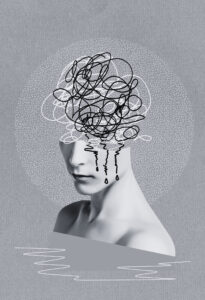
Yet, clinicians and neuroscientists began encountering puzzles that lobar theory could not solve. Patients with no visible brain damage reported paralysis, seizures, or sensory loss. Others with extensive lesions recovered surprising well, their brains seemingly re-routing lost functions. Something more complex was going on- something that couldn’t be pinned to a single lobe.
Enter the Network Brain:
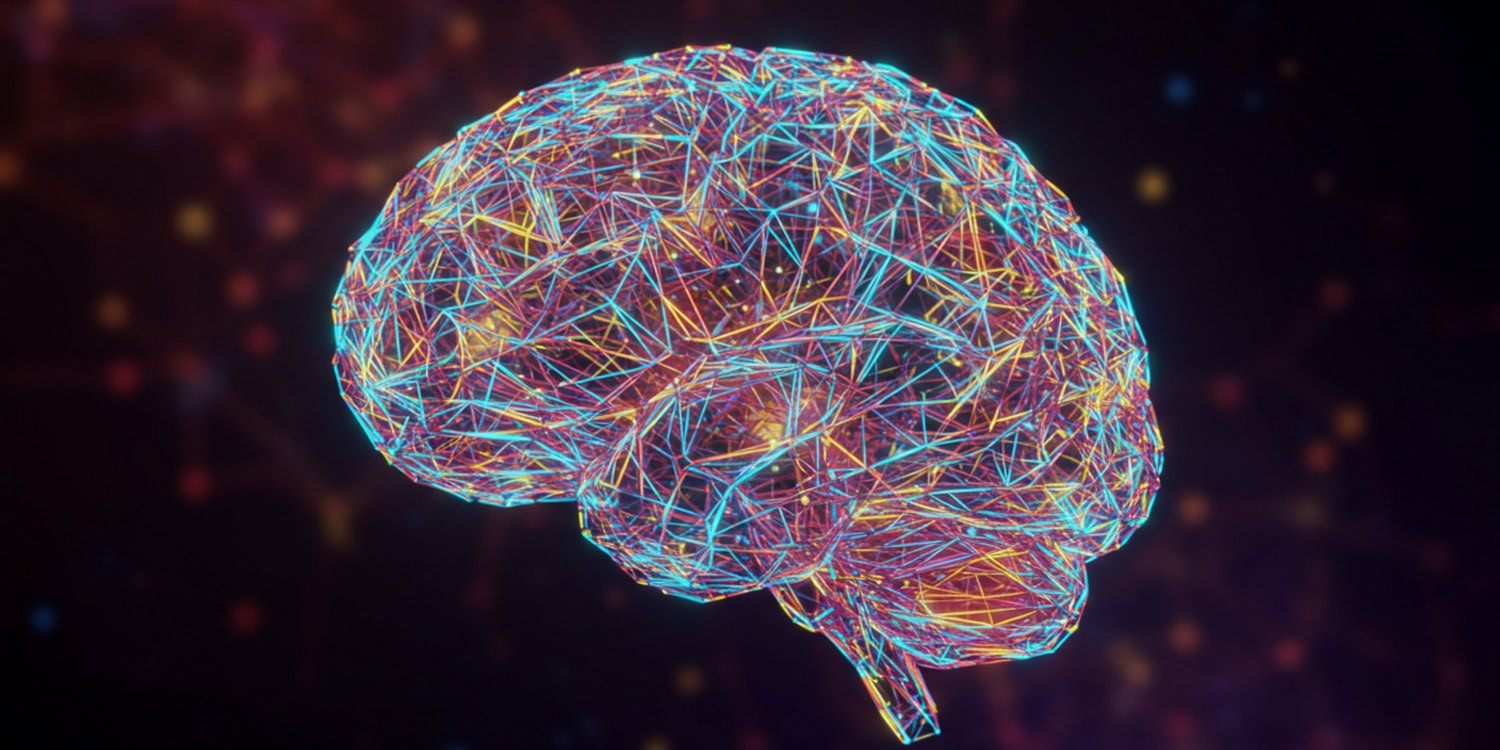
In the last two decades, the brain has been increasingly understood as a set of interconnected networks – fluid, overlapping circuits of activity that stretch across traditional lobe boundaries.
Three of the most studied networks are:
- The Default Mode Network (DMN): active during introspection, memory, and self-referential thinking
- The Salience Network: detects and filters important stimuli, helping the brain decide what to focus on
- The Central Executive Network: Involved in goal-directed behaviour and working memory
These networks are constantly interacting. Importantly, they aren’t located in just one lobe but are distributed across multiple brain regions. When one part of a network is disrupted – by injury, disorder, or stress – the whole system can suffer.
Functional Neurological Disorder: The Invisible Breakdown
FND Provides a striking example of why a network-based model is essential. Once dismissed as a ‘conversion disorder’ or simple ‘psychosomatic’ FND involves real, disabling neurological symptoms – like paralysis, tremors, or seizures – but without structural brain damage or aberrations seen in conditions like stroke or epilepsy.
For years, this baffled doctors. If the lobes look normal, how could symptoms be so profound?
Recent studies using functional Magnetic Resonance Imaging (Fmri) and resting-state connectivity analysis have illuminated the answer. Research by Dr. W. Court LaFrance and collegues has shown that in FND patients, functional communication between brain regions is disrupted, particularily between:
- Motor areas and emotion-related areas like the amygdala
- The salience network and motor control circuits, leading to problems initiating or inhibiting movement
- The default mode network and areas involved in body awareness and sensory processing
This suggests that FND symptoms arise not from damage to one part of the brain, but from network-level dysregulation – in other words, a problem in the brain’s software, not its hardware.
Brain Injury: A Story of Adaptation and Plasticity
Ironically, a similar insight is emerging from the study of patients with brain lesions, such as those from strokes or traumatic brain injuries (TBI). In these cases, where structural damage is clear, recovery does not always correlate with the size or location of the injury. Why do some patients with large lesions regain functions, while others with smaller ones struggle?
Here too, network science offers answers.
Studies using diffusion tensor imaging (DTI) and graph theory to map the brain’s ‘connectome’ shows that recovery depends heavily on the integrity of broader networks, not just the location of the lesion. If alternative pathways within a network remain in tact, the brain can often recruit functions – a phenomenon known as neuroplasticity.
A 2018 study published in Brain found that stroke patients with preserved connectivity in the sensorimotor network had significantly better motor recovery, regardless of lesion size. Similarly, cognitive recovery after TBI is now linked more to the resilience of functional networks than to which lobe was injured.
Rethinking Diagnosis and Treatment
This shift from lobes to networks is not just academic – it has profound implications for how we diagnose, treat, and understand brain disorders
For FND:
- Functional neuroimaging is helping to validate patients’ experiences, showing that their symptoms reflect real brain dysfunction – even if it is not visible on a CT scan.
- Treatment like neurofeedback, mindfulness-based therapy, and targeted physiotherapy now aim to retrain disrupted networks, rather than just managing symptoms.
For Brain Injury:
- Network mapping is being used to predict recovery trajectories, helping clinicians design personalized rehabilitation strategies
- New technologies transcranial magnetic stimulation (TMS) and non-invasive brain stimulation target specific networks to boost recovery
Education and Public Understanding Must Catch Up
Despite this network revolution in neuroscience, most public (and even medical) understanding remains rooted in the lobal model. This can lead to frustration, stigma, and misunderstanding – especially for patients with FND or ‘invisible’ brain injuries.
For example, if someone has a seizure, but their MRI is normal, they may be told ‘it’s all in your head’ – a statement that misses the nuance that yes it is in the brain, but in its function, not its form.
Just as we’ve moved past phrenology (the idea that bumps on the skull reveal personality), we must move past thinking of the brain as a collection of isolated lobes.
The Future: From Maps to Systems
Understanding the brain as a network system rather than a mosaic of lobes is one of the most important paradigms shifts in modern neuroscience. It aligns better with the realities of both functional disorders and brain recovery, and it holds promise for more accurate diagnoses and effective treatments.
As brain science continues to integrate machine learning, real-time imagine, and computational modelling, the hope is that one day we will not just treat the injured brain, but actively reboot and rewire it.
In this new framework, the question is not, ‘Where is the damage?’, but rather, ‘Which networks are disrupted – and how can we restore their harmony?’
Sources and Studies Referenced:
LaFrance WC, et al. (2014). “Functional neuroimaging in FND: A review.” NeuroImage: Clinical.
Perez DL, LaFrance WC (2016). “Functional neurological disorder: Advances in understanding and treatment.” BMJ.
Corbetta M, et al. (2018). “Common behavioral clusters and subcortical anatomy in stroke.” Brain.
Sharp DJ, Scott G, Leech R (2014). “Network dysfunction after traumatic brain injury.” Nature Reviews Neurology.