
The Overlooked Core of ADHD and its impact on Learning
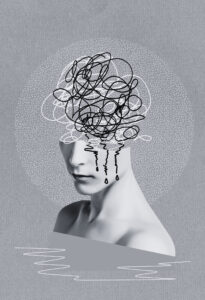
When most people think of Attention-Deficit/Hyperactivity Disorder (ADHD), they imagine fidgety children, short attention span, and impulsive behaviours. While these traits are certainly part of the clinical picture, there is a crucial and often overlooked component of ADHD that has profound effects on daily life, emotional dysregulation. For individuals with ADHD, difficulty regulating emotions is not a secondary issue or side effect. Instead, it may be a core feature of the disorder, with significant consequences in learning environments and social relationships.
Understanding the role of emotional dysregulation in ADHD offers powerful insights into the lived experience of those affected and help us reimagine more effective interventions, such as neurofeedback to support better outcomes.
What is Emotional Dysregulation?
Emotional dysregulation refers to difficulty in managing emotional responses to stimuli. This can manifest as intense mood swings, irritability, frustration, low tolerance for stress, and an inability to calm down after an emotional event. People with emotional dysregulation may overreact to minor annoyances or feel overwhelmed in emotionally charged situations.
In the context of ADHD, these emotional difficulties are not merely byproducts of impulsivity, they are tightly intertwined with the neurological and cognitive underpinnings of the disorder.
Emotional Dysregulation in ADHD: A Core Symptom?
Historically, the DSM (Diagnostic and Statistical Mnual of Mental Disorders) has not listen emotional dysregulation as a diagnostic criterion for ADHD. However, mounting evidence suggests that it should be considered a core component of the condition.
A seminal study published in The American Journal of Psychiatry (Barkley & Fischer, 2010) followed a cohort of children with ADHD into adulthood and found that those with persistent ADHD symptoms exhibited significantly higher levels of emotional dysregulation compared to controls. The authors argued that emotional impulsiveness, mood lability, and reactive aggression are not just associated with ADHD, they may be as central to the disorder as inattention and hyperactivity.
Neuroscience research supports this view. Functional MRI studies have shown that individuals with ADHD exhibit dysregulation in the amygdala, prefrontal cortex, and anterior cingulate cortex, regions involved in emotional regulation and executive functioning (Shaw et al., 2014). When these brain areas do not communicate effectively, it impairs both the regulation of attention and the regulation of emotion.
Why emotions Matter in the process of Learning
Emotions play a crucial role in the learning process. Emotional states influence:
- Attention and focus
- Memory consolidation
- Motivation
- Social Interactions
- Response to feedback
A child who feels calm and supported is more likely to focus, retain new information, and remain motivated. Conversely, a child who experiences chronic frustration, rejection or anxiety may shut down cognitively or exhibit disruptive behaviour. This emotional ‘clutter’ interferes with the brain’s capacity to engage in higher-order thinking.
For students with ADHD, the classroom can be a particularly volatile emotional environment. Struggles with task completion, peer relationships, and behavioural expectations can lead to a cascade of negative emotions – frustration, shame, sadness, anger that are hard to manage and even harden to escape.
In a 2020 review published in Frontiers in Psychology, Graziano and Garcia highlighted that children with ADHD who show greater emotional reactivity and poor emotional regulation tend to have more difficulties in academic performance and peer relationships, even more so that children with ‘pure’ inattentive symptoms.
The Classroom Experience: A Vicious Cycle
Let’s consider a typical classroom scenario. A student with ADHD might be excited to start the day, but then forgets their homework at home. The teacher scolds them. Embarrassed, they react impulsively – talking back or shutting down. As the day continues, they struggle to stay on task, miss instructions, and fall behind. Peers may tease them for not following social norms or being ‘weird’. By lunchtime, their emotional tank is empty and behaviour spirals further.
This cycle is not the result of laziness or a lack of intelligence. It is the predictable outcome of a nervous system that is ill-equipped to regulate emotions under stress.
Emotional Dysregulation is Linked to Long-Term Outcomes
Emotional dysregulation in ADHD does not only affect learning – it also predicts poor long-term outcomes. Studies show that poor emotional control in childhood ADHD Is associated with increased risk of depression, anxiety, substance abuse, and interpersonal conflict in adulthood (Martel, 2009; Barley, 2015).
In fact, emotional dysregulation may be the single most predictive factor for functional impairment across multiple domains, from school to work to relationships.
This underscores the urgency of addressing emotional regulation in treatment plans – not just as a bonus skill, but as a primary therapeutic target.
How Neurofeedback Can Help
Traditional ADHD interventions, such as medication and behavioural therapy, can be effective for improving focus and reducing hyperactivity. However, they often do not directly address emotional dysregulation. This is where neurofeedback comes in.
Neurofeedback is a non-invasive form of brain training that uses real-time monitoring of brain activity to help individuals learn to self-regulate. By reinforcing healthy regulating patterns associated with calm focus and emotional stability, neurofeedback helps build stronger communication between emotional and executive centres of the brain.
A meta-analysis published in European Child & Adolescent Psychiatry (Van Doren et al., 2019) found that neurofeedback had a medium to large effect size in improving inattention and impulsivity in children with ADHD. More importantly, follow-up studies have shown improvements in emotional control, stress tolerance, and resilience following consistent neurofeedback training.
At Encephalon, we work with children and adults using cutting-edge neurofeedback protocols tailored to each individual’s brain profile. Out goal is to strengthen the brain’s capacity to self-regulate, not just cognitively but emotionally.
A Call for a Paradigm Shift:
The persistent framing of ADHD as a disorder of attention does a disservice to those who live with its daily challenges. By recognising emotional dysregulation as a core component of ADHD, we open the door to more comprehensive and compassionate interventions.
Educators, clinicians, and caregivers must begin to view emotional regulation as a primary skill to be taught and supported, not merely a behavioural inconvenience. Likewise, researchers and polymakers should prioritise emotional health in ADHD funding and program design.
For parents of children with ADHD- or adults navigating the world with an ADHD brain, the recognition of emotional dysregulation as central to the condition can be both validating and empowering. It explains to much: the quick tempers, the emotional meltdowns, the internal storms, that others may never see.
Final Thoughts:
Emotions are not separate from learning; they are the bedrock of it. When students with ADHD are taught how to regulate their emotions, supported with evidence-based tools like neurofeedback, and understood for the way their brains truly function, their potential is no longer hidden behind frustration or shame. Instead, it is given space to flourish.
At Encephalon, we’re committed to offering neurofeedback services that target the whole brain- including the emotional centres often left out of the ADHD conversation. If you or a loved one is navigating the challenges of ADHD, we invite you to explore how neurofeedback can help bring balance, clarity, and emotional strength. You can book your free consultation call with us by clicking HERE.
References:
Barkley, R. A., & Fischer, M. (2010). The unique contribution of emotional impulsiveness to impairment in major life activities in hyperactive children as adults. Journal of the American Academy of Child & Adolescent Psychiatry, 49(5), 503–513.
Shaw, P., Stringaris, A., Nigg, J., & Leibenluft, E. (2014). Emotion dysregulation in attention deficit hyperactivity disorder. American Journal of Psychiatry, 171(3), 276–293.
Graziano, P. A., & Garcia, A. (2016). Attention-deficit hyperactivity disorder and children’s emotion dysregulation: A meta-analysis. Clinical Psychology Review, 46, 106–123.
Martel, M. M. (2009). Research review: A new perspective on attention-deficit/hyperactivity disorder: emotion dysregulation and trait models. Journal of Child Psychology and Psychiatry, 50(9), 1042–1051.
Van Doren, J., Arns, M., Heinrich, H., Vollebregt, M. A., Strehl, U., & Loo, S. K. (2019). Sustained effects of neurofeedback in ADHD: a systematic review and meta-analysis. European Child & Adolescent Psychiatry, 28(3), 293–305.